

One Health
January 12, 2019
Read more
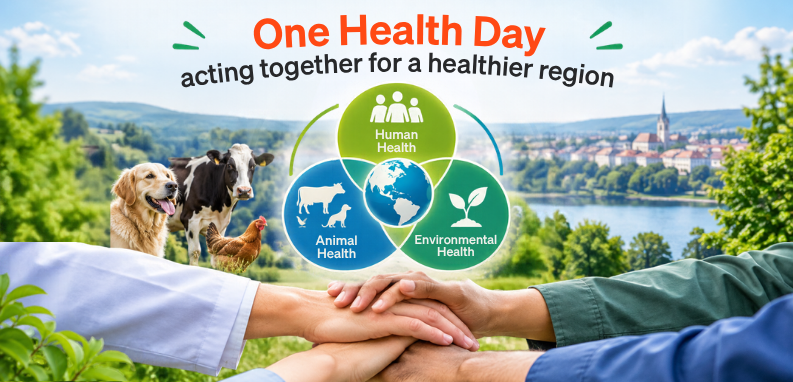
Every 3 November, One Health Day reminds us that the health of people, animals, plants and ecosystems is deeply connected. In the Middle East, where families, herds, wildlife and water resources share the same landscapes, that link is part of daily life.
As a member of the Quadripartite alongside the Food and Agriculture Organization (FAO), the United Nations Environment Programme (UNEP) and the World Health Organization (WHO), the World Organisation for Animal Health (WOAH) continues to advance One Health through science, collaboration and investment. With the One Health Joint Plan of Action now extended to 2029, countries in the region and beyond have a longer horizon to plan and deliver. One Health Day is a community-led campaign, hosted by the One Health Commission and partners, and it invites everyone to take part.
One Health is an integrated, unifying approach that sustainably balances and optimises the health of people, animals and ecosystems. It recognises that the health of humans, domestic and wild animals, plants and the wider environment is closely linked and interdependent.
The concept has grown. Today, One Health goes beyond the human–animal link and brings together human, animal, plant and environmental health under one shared vision. It also covers the need for clean water, energy and air, safe and nutritious food, and action on climate change.
This matters across the Middle East, where families, herds, wildlife, and shared water and grazing resources are closely connected. Safeguarding animal health protects livelihoods and food security. It protects public health by preventing zoonotic spillovers and the jump of diseases from animals to people. It also safeguards biodiversity and ecosystems and supports action against antimicrobial resistance (AMR).
In the region, WOAH’s One Health work covers diseases such as rabies, brucellosis, Rift Valley fever and avian influenza, alongside antimicrobial resistance.
The numbers show why this matters. WOAH estimates that more than 60% of known human infectious diseases, and about 75% of emerging ones, are zoonotic, meaning they spread between animals and people. Zoonotic diseases cause an estimated 2.5 billion cases of human illness every year, and more than a third of emerging zoonotic diseases are linked to food-producing animals. Worldwide, the health of a herd and the health of a family are rarely separate questions.
Rabies shows what is at stake. Dog-mediated rabies still causes an estimated 59,000 human deaths a year worldwide, and dogs are responsible for up to 99% of human cases. Once symptoms appear the disease is almost always fatal, yet it is entirely preventable through dog vaccination and timely care after a bite. This is why WHO, FAO, WOAH and the Global Alliance for Rabies Control share the goal of Zero by 30: ending human deaths from dog-mediated rabies by 2030.
Since 2022, FAO, UNEP, WHO and WOAH have worked together as the Quadripartite, the first four-way partnership of its kind on One Health. WOAH chaired the Quadripartite Secretariat in 2024–2025.
Science keeps pace with this work. The One Health High-Level Expert Panel (OHHLEP) has begun its second term and is broadening its expertise to include social sciences, economics and governance, because health challenges are never only biological.
On 2 June 2025, FAO, UNEP, WHO and WOAH signed a regional Quadripartite joint statement in Cairo. It created a Regional Quadripartite One Health Coordination Mechanism, with leadership rotating among the four organisations and FAO chairing first.
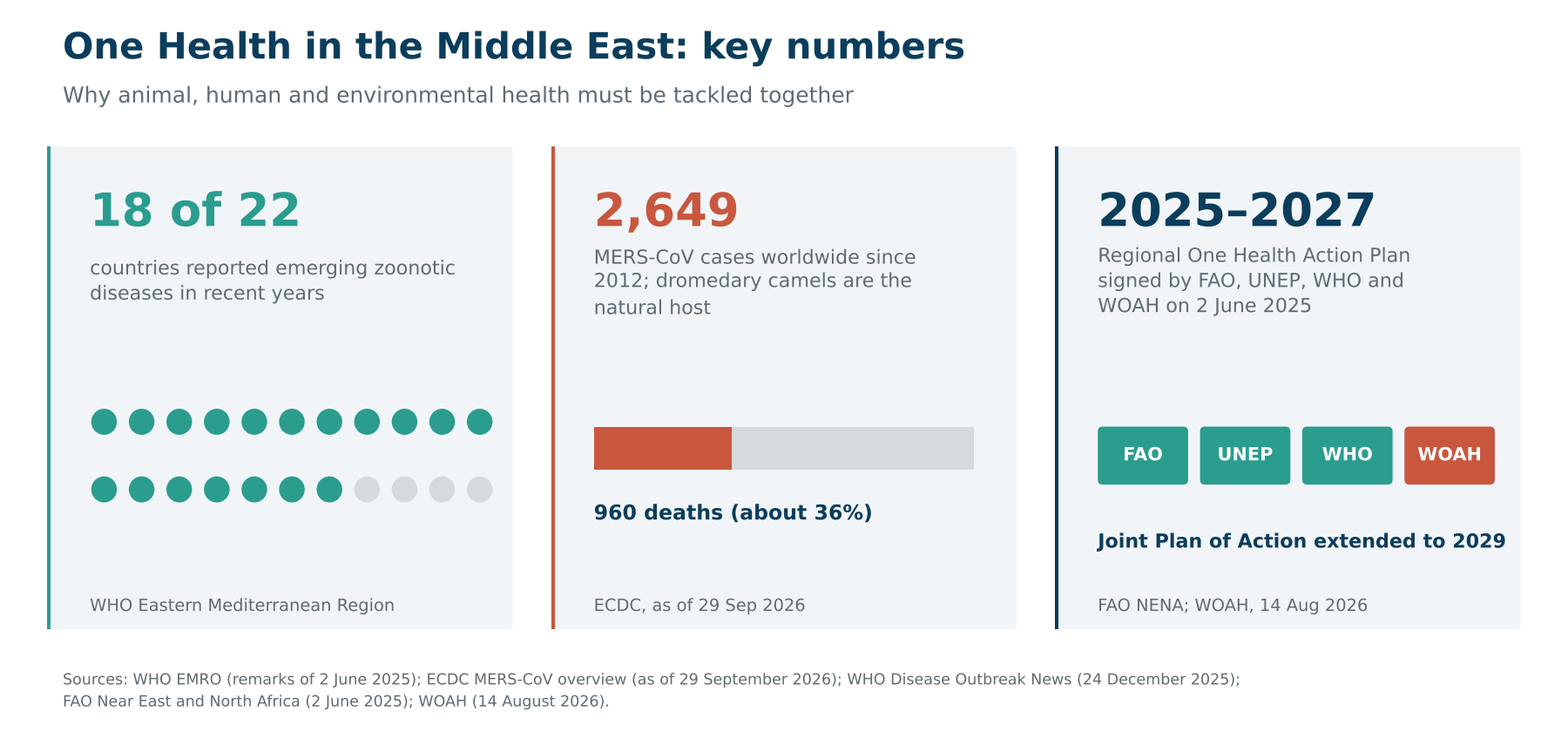
The mechanism comes with a Regional One Health Action Plan 2025–2027. The plan aims to strengthen surveillance, build technical capacity and mobilise resources, with permanent technical working groups linking human health, agriculture and the environment, and shared protocols for disease surveillance and outbreak response.
The need is clear. According to WHO, 18 of the 22 countries in the Eastern Mediterranean Region have reported emerging zoonotic diseases in recent years. Dr Ahmed Al Majali, speaking for WOAH, said the initiative could serve as a blueprint for other regions.
From 14 to 16 October 2025, Manama, Bahrain, hosted a regional One Health workshop on strengthening implementation through the Joint Plan of Action. Representatives of 14 Middle Eastern countries took part, together with FAO, WHO, UNEP, the Arab Organization for Agricultural Development (AOAD) and WOAH.
Few diseases show the link between animals and people as clearly as Middle East respiratory syndrome (MERS). Dromedary camels are the virus’s natural host and a source of human infection. The European Centre for Disease Prevention and Control (ECDC) counts 2,649 laboratory-confirmed cases and 960 deaths worldwide since 2012, as of 29 September 2026. WHO reports that 27 countries have recorded cases, and that Saudi Arabia accounts for 2,224 of the 2,635 cases reported to WHO by December 2025. Two cases and one death have been reported in 2026, all in Saudi Arabia. WHO rates the global and regional risk as moderate and does not recommend travel or trade restrictions.
Infographic: key regional figures on emerging zoonoses, MERS-CoV and the Regional One Health Action Plan 2025–2027. Sources: WHO EMRO, ECDC, FAO and WOAH.
The Quadripartite has extended the One Health Joint Plan of Action to 2029, and its Memorandum of Understanding has been renewed to 2030. Countries gain more predictability to plan, implement and scale their One Health priorities.
For the Middle East, this longer horizon sits alongside the Regional One Health Action Plan 2025–2027, so national veterinary, public health and environment authorities can plan within one shared global and regional framework. WOAH continues to work with its Members and partners in the region to turn this vision into action, as set out in the unified call for One Health.
The WOAH Regional Representation for the Middle East is preparing two workshops in December 2026 to bring these commitments to national level.
Muscat, Oman, 1–2 December 2026. A regional workshop will promote the One Health curriculum, strengthen event-based surveillance, which picks up early warning signals from communities, media and frontline workers, and map key stakeholders. One Health focal points from across the Middle East will attend, with FAO, WHO, UNEP and the Arab Organization for Agricultural Development (AOAD). Expected results include a stakeholder map, recommendations for bringing the curriculum into national systems and draft country action plans.
Beirut, Lebanon, 16–17 December 2026. A national workshop on the One Health Joint Plan of Action will launch the Multi-Partner Trust Fund (MPTF) One Health programme in Lebanon, which has been selected for MPTF support. Ministries of agriculture, health and environment, Quadripartite partners and WOAH experts will prioritise actions aligned with the Joint Plan of Action and agree follow-up, covering zoonotic diseases, antimicrobial resistance, food safety, governance and financing. The outcomes will feed into Lebanon’s national One Health roadmap.
Both events support countries in moving from joint commitments to national action.
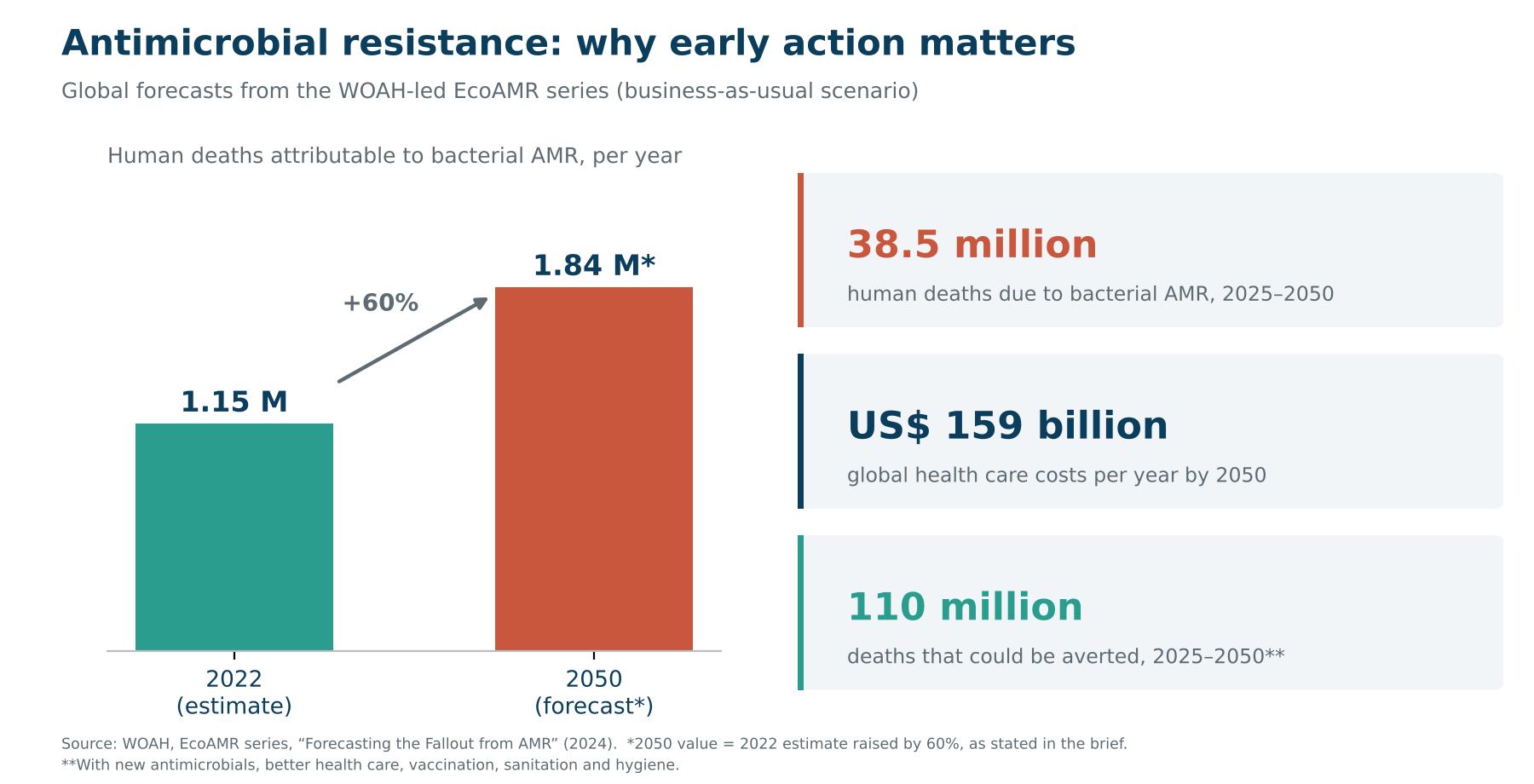
Antimicrobial resistance shows why action cannot wait. It already contributes to more than one million human deaths each year and to US$17 billion in annual GDP losses in livestock production systems. Without coordinated action, WOAH projects around 39 million human deaths and US$1.7 trillion in annual global livestock GDP losses by 2050. Acting early changes this picture: a 30% cut in livestock antimicrobial use within five years could add about US$120 billion to global GDP between 2025 and 2050.
Infographic: AMR in numbers, based on figures from the WOAH EcoAMR policy brief.
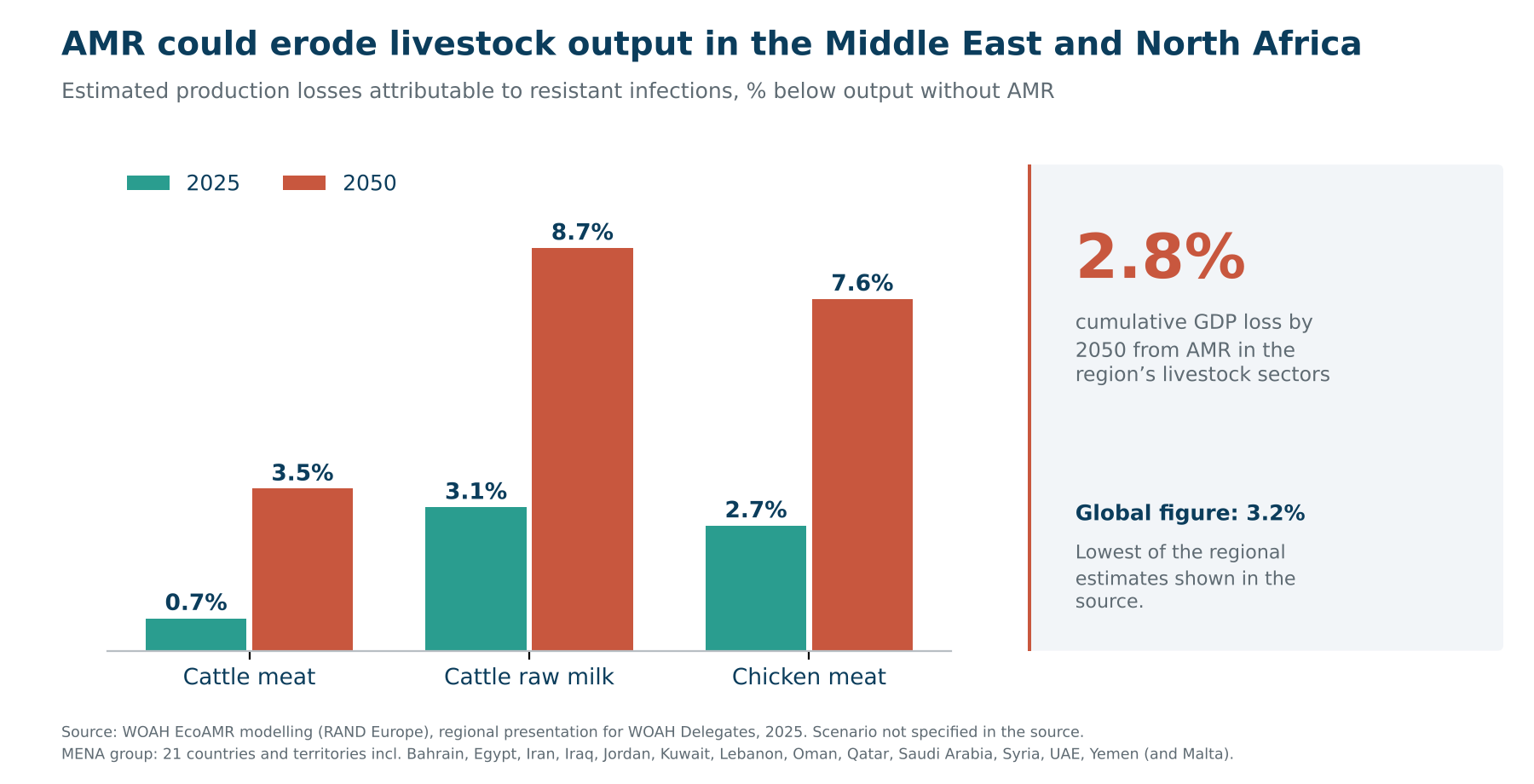
The Middle East and North Africa are exposed too. WOAH’s EcoAMR modelling estimates that resistant infections cut cattle meat output in the region by 0.7% in 2025, rising to 3.5% by 2050. Over the same period, losses in raw cattle milk grow from 3.1% to 8.7%, and in chicken meat from 2.7% to 7.6%. Cumulatively, AMR in livestock sectors could cost the region 2.8% of GDP by 2050, slightly below the global estimate of 3.2% but a heavy toll for farmers and food supply.
Chart: estimated livestock production losses attributable to resistant infections, 2025 and 2050. Source: WOAH EcoAMR modelling (RAND Europe).
Veterinarians, doctors, farmers, environmentalists, students and communities all have a role. Share, learn and collaborate this One Health Day, then keep the momentum going by joining World Antimicrobial Awareness Week (18–24 November) under the theme “One Health, one action: Prevent AMR now.”
Healthy animals. Healthy people. Healthy planet. Together, we act for One Health.

